THEY DID IT!
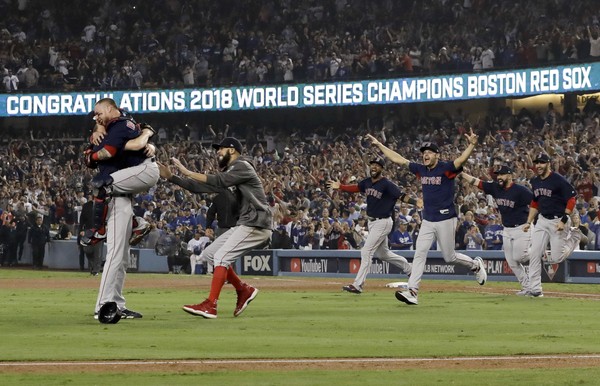
After defeating the Los Angeles Dodgers 5-1 in Game 5 on Sunday, the Boston Red Sox reclaimed their throne on top of the entire world with a 4-1 World Series victory!
For me, this year was heavily involved with the Boston Red Sox. This year marked the rebirth of my love for baseball.
Let me tell you my story about how the 2018 Boston Red Sox season truly affected my life.
It begins in October of Last Year.
I knew the Sox needed to make moves after the disappointing Divisional Series exit last October to the eventual 2017 champions, the Houston Astros.
They began their off-season almost immediately. They fired John Farrell and signed the 2007 World Series champ with the Red Sox, Alex Cora.
Cora was just a bench coach for Houston and clearly had World Series experience both as a coach there and as a player with the Red Sox. I liked the move at first solely because it meant John Farrell was gone.
Then, the Yankees signed Giancarlo Stanton, the 2017 NL MVP and Home Runs leader, in December of 2017. I thought, well, there’s no way they have a chance now.
But, in February, just as the Sox are getting ready to start Spring Training, they signed JD Martinez. At that point, Martinez was the only other MLB player other than the Angels’ Mike Trout who had batted .300 with 125 homers and .550 slugging.
This was an incredible move. One that I thought the Red Sox truly needed to make in order to possibly move past the Divisional Series this year. If not, at least the Red Sox-Yankees series’ might actually mean something this year.
The Red Sox started their winning season with the best Spring Training record in the majors: 22-9. For all those that say Spring Training doesn’t matter, Alex Cora disagrees. He invited the players over to his house before the year started and there, a World Series championship was discussed.
After their Spring Training “championship,” the Sox began their regular season on March 29 and jolted out of the gate with a 17-2 starting record.
In their 20th game, the Sox were playing the Oakland A’s. As it was still really early in the season, I hadn’t watched too many of the games. Location restrictions also prevented me from doing so too but let’s not get into that because streaming exists.
Anyway, that night on April 21, I watched an entire Red Sox game for the first time this season. They got friggin’ no-no’d by Sean Manaea. The Sox dropped to 17-3 and I was appalled.
I felt personally responsible for the loss and the no-hitter against the Sox, but I had fun watching it. I thought “Hey, I hadn’t watched a full regular season game that actually mattered in a long time.” I noticed that my baseball watching habits were only religious when it got to be August-October. I am also part-Chicago White Sox fan and they haven’t played too much October baseball in a while.
Watching the Red Sox getting 0 hits that night made me want to actually start watching more and get back into my love for baseball.
It was around this time I started listening to the Section 10 podcast, a Barstool Sports podcast all about the Red Sox.
This podcast helped me stay on track with every single Red Sox game this season and I’m so happy I started listening to it. By hearing Jared Carrabis at least twice every week, I stayed up to date with the team and I got so excited about all things Red Sox.
I was getting scoring updates to my phone and my Twitter had started to become invaded with Red Sox content. All the way through until now, the Red Sox have dominated my Twitter timeline.
My love for the game was growing again.
It was also around this time where I was getting interviews for internships. Actually, I wasn’t getting any interviews at all.
That was until I got in touch with Dan Rea, the GM of the Pawtucket Red Sox. This team being, of course, the Triple-A affiliate of the Boston Red Sox.
Thanks to my Uncle Bill Stewart III, I got an interview with Mr. Rea mainly because my Uncle Billy was his hockey coach in high school and had helped Mr. Rea a lot in school.
I didn’t just get the job because of that family connection. I got it because I worked hard and I looked good on paper. I still had to impress in the interview and I guess I did because I got the internship.
I spent my summer in Boston and Pawtucket working for the Red Sox organization and I’ve never had a greater experience in my whole life.
I got to be close with the organization as they continued to win and win and win and win again.
I was still listening to Section 10 and working every day. I was having so much fun with nothing but baseball on my mind.
Here are some of my pictures:
Me at Fenway

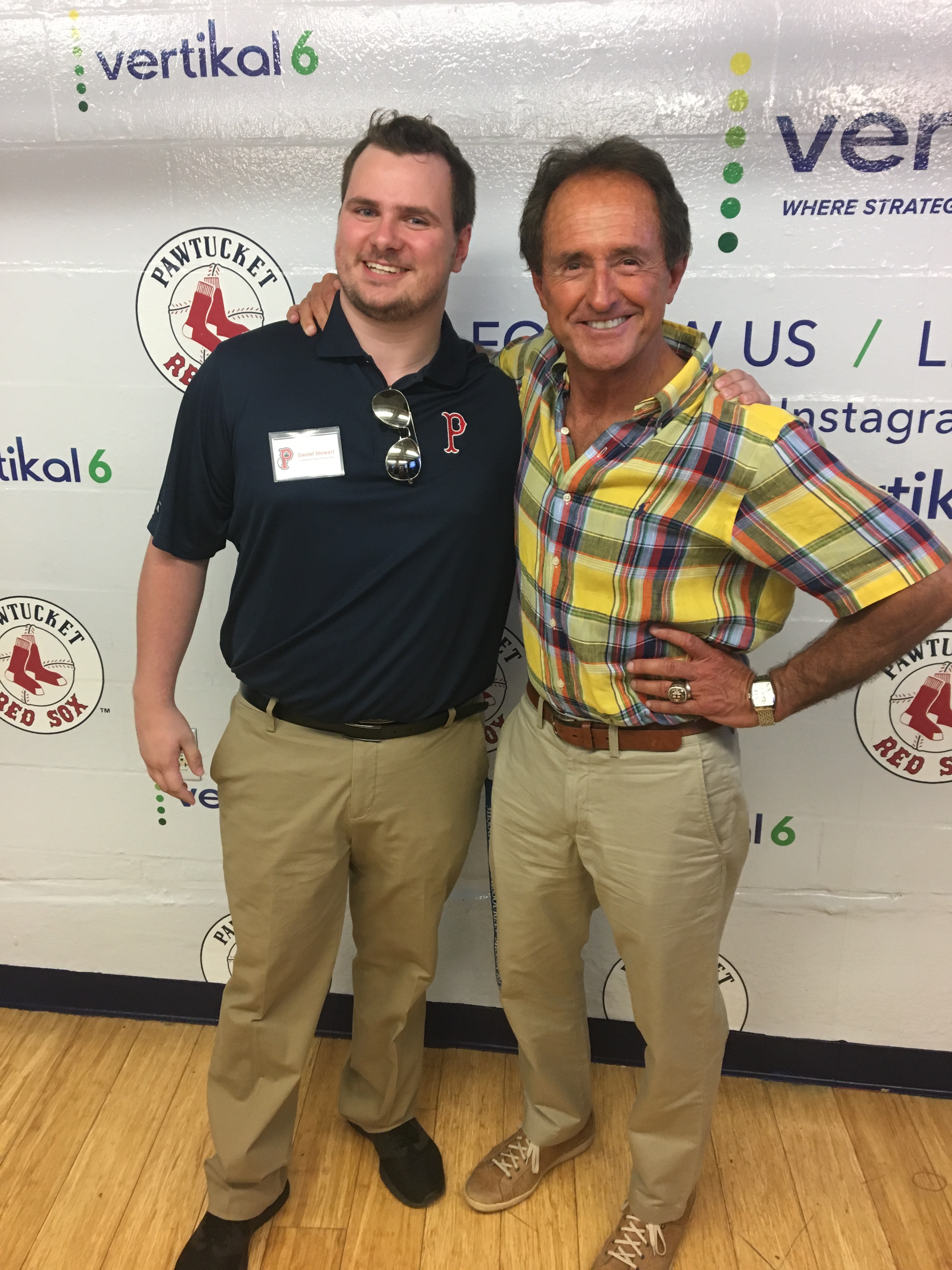
Me and Red Sox Hall of Famer, Fred Lynn.
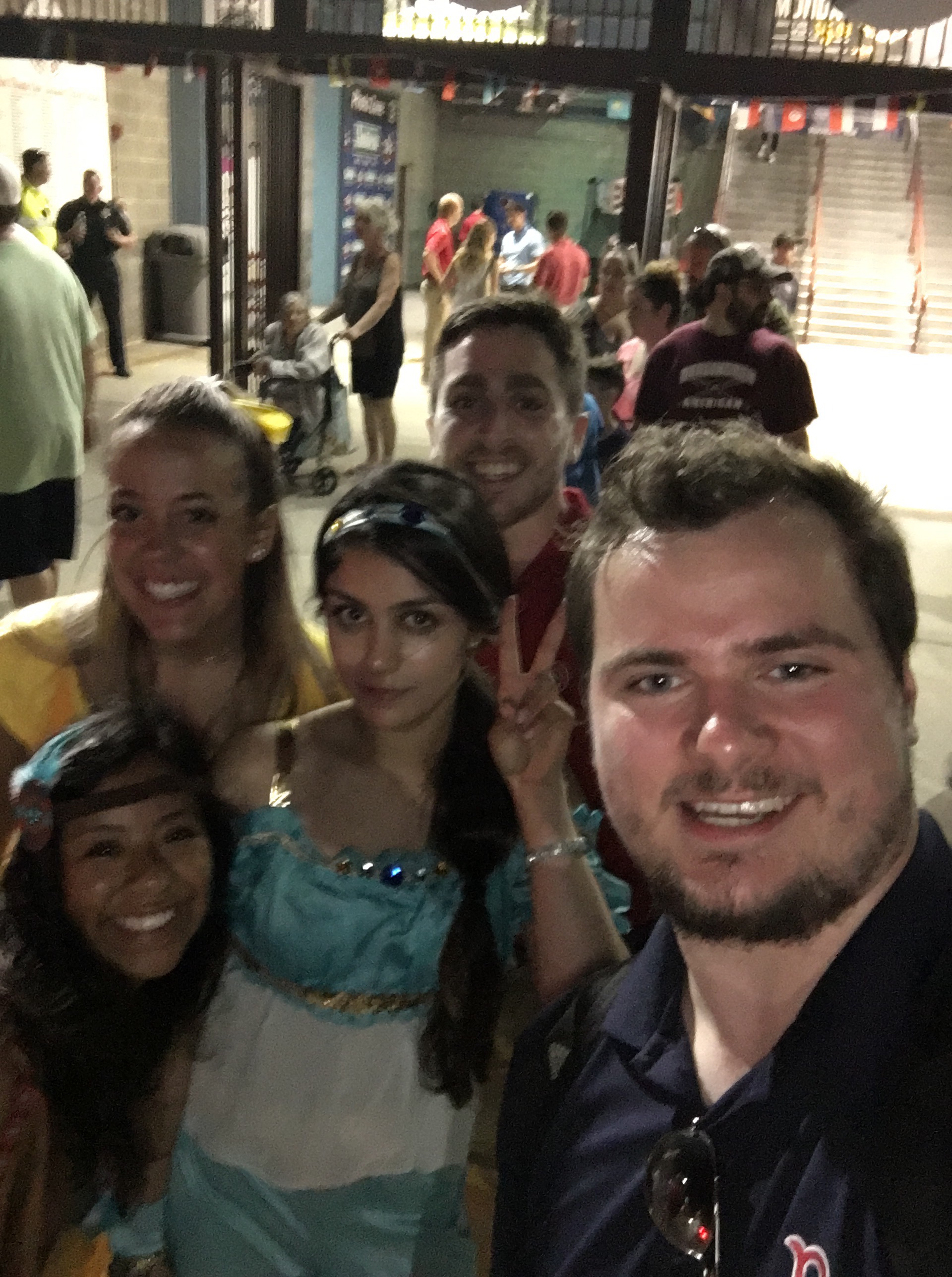
Me and PawSox co-workers Aaron Weisberg along with Alyssa Hajos, Karen Zenteno and Sabriya Chaudhry dressed as Princesses.
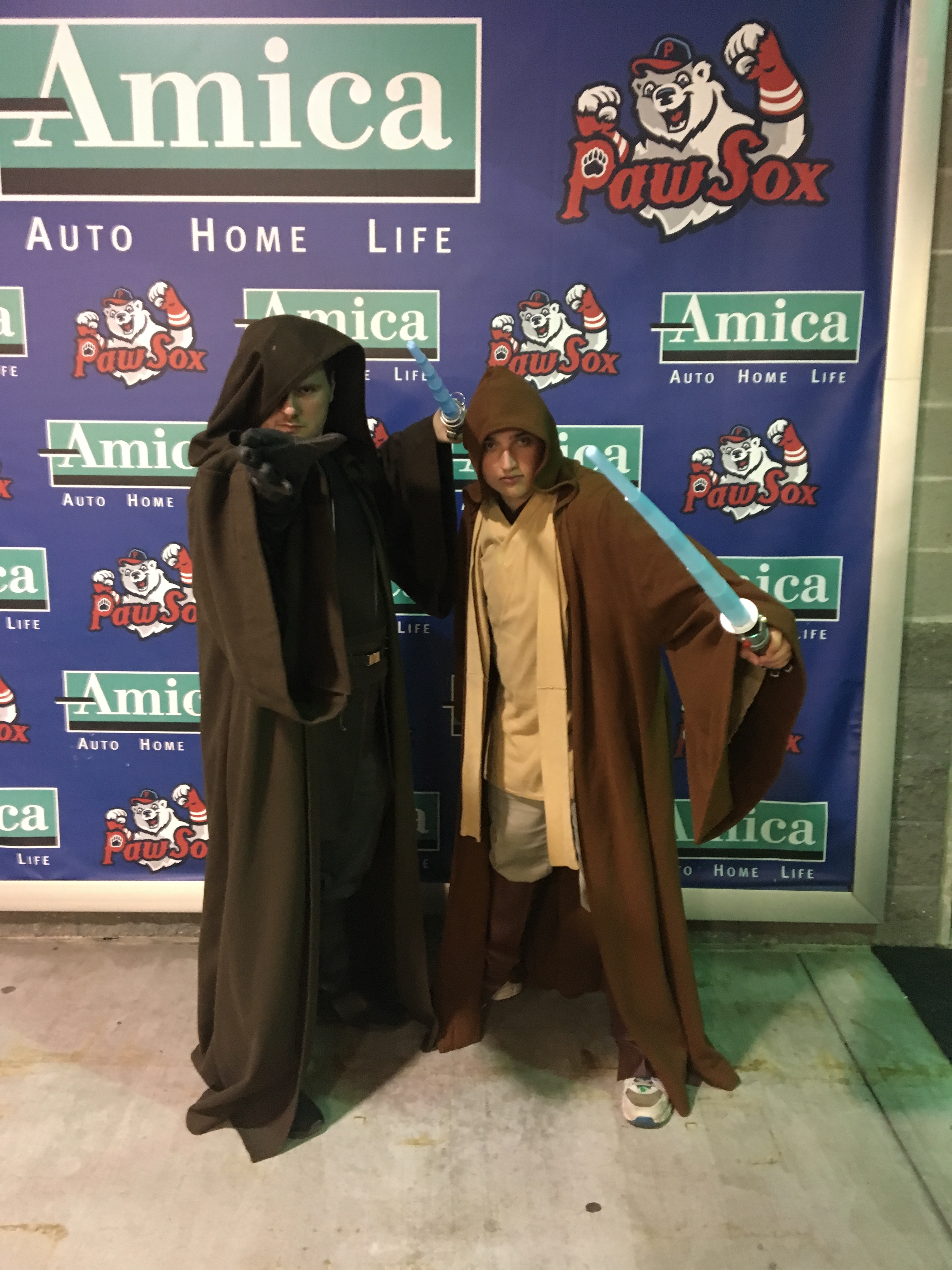
Me and PawSox co-worker Andrew Ciechanowski dressed as Anakin Skywalker and Obi-Wan Kenobi on “Star Wars” night
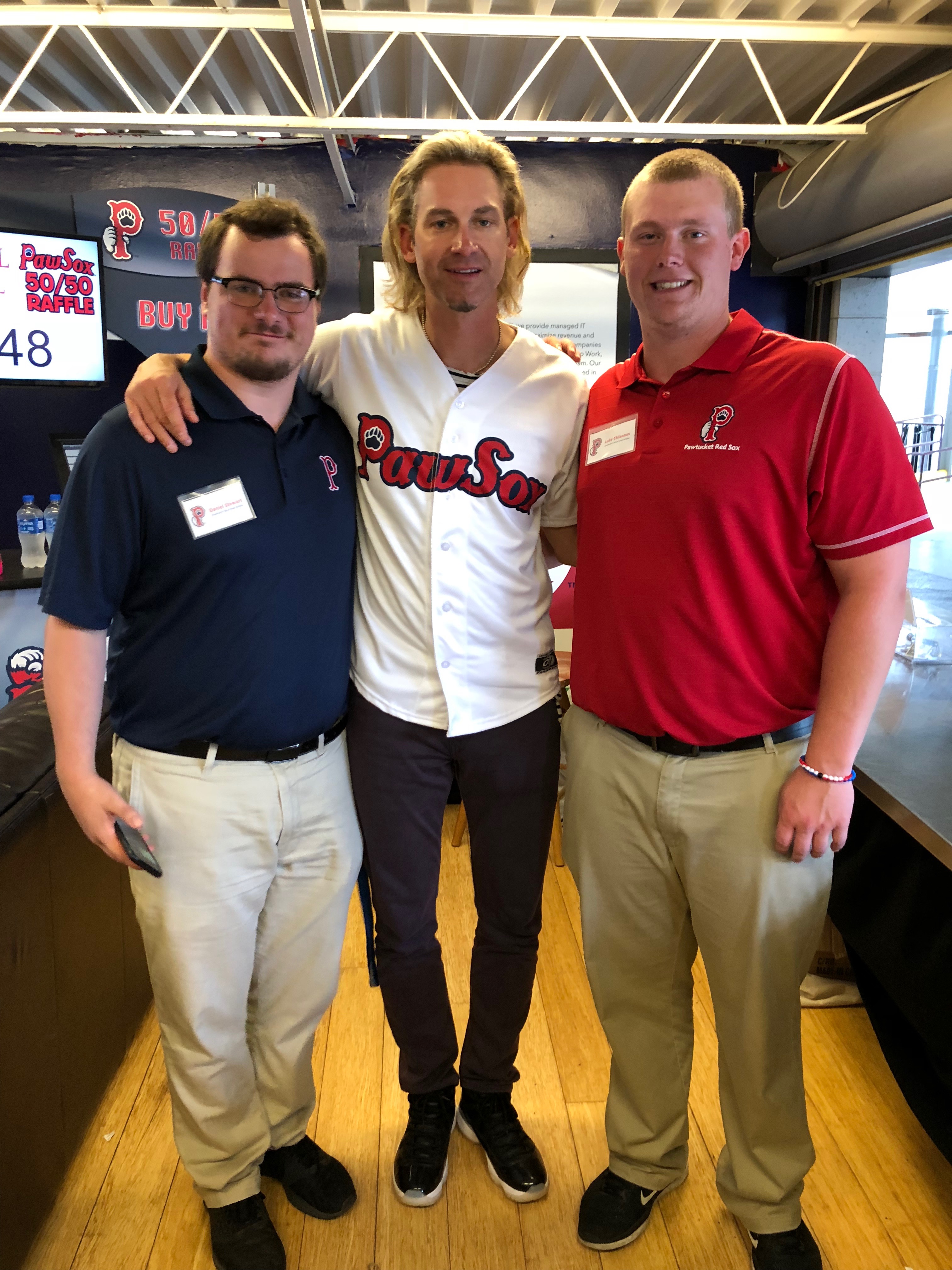
Me and co-worker Luke Chiasson arm-and-arm with 2004 Boston Red Sox pitcher and World Series Champion, Bronson Arroyo.
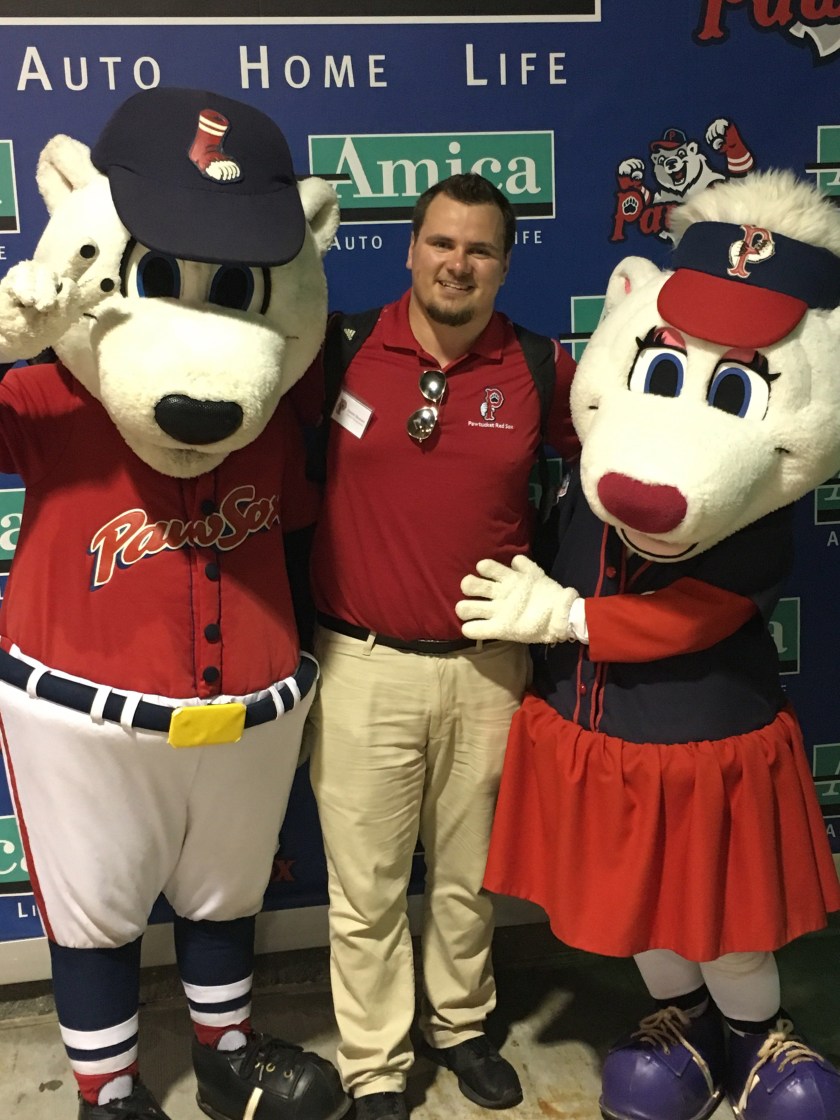
Me with PawSox mascots, Paws and Sox.
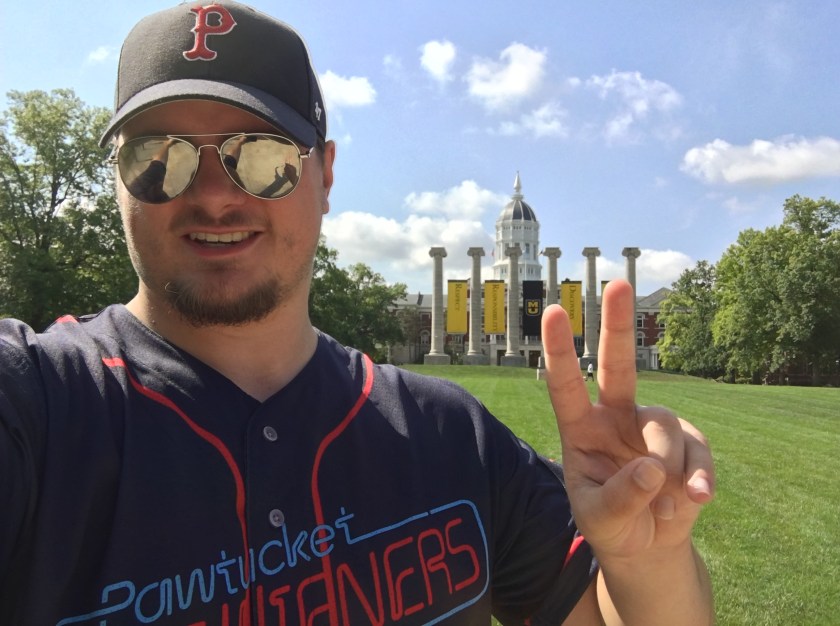
Me back in CoMo wearing Pawtucket Hot Wieners gear to help promote the team’s name change on August 16.
I have so many more memories from this summer than I do photos.
To my co-workers that I don’t have pictures with: Addie Afonseca, Alex Hale, David Brake, Jacob Madsen, Jean-Manuel Martinez, Joe “K-Joe” McNamara, Kelly McGarry and Tommy Sullivan, I simply couldn’t have asked for better people to work with. You guys were amazing and made this season special all on top of the World Series! Thank you!
From Mr. Rea and management to all my friends who were the mascots, to the people who I just head-nodded at McCoy Stadium in Pawtucket, thank you. It was an absolutely incredible summer and I’ll never forget it, ever. Most of the reason why I fell in love with baseball again was because of the PawSox and all of the people I worked with. I can’t stress that enough.
I learned so much about the team and the operations in baseball. I also learned that I want to spend the rest of my life working in baseball and I’m going to do my best to make sure I will.
I know I paused the Red Sox story to get into my sentimental PawSox bits, but let’s pick up where I know it’s good.
It does help that I was living at my Uncle Billy’s, a mere 30ish minute drive to Fenway. The stadium that kept seeing magic over and over again this season. This, too, helped me fall in love with the game and the team again.
They just kept on winning. You’d better believe that since I was in Boston and not Missouri, I watched or attended every single game the Red Sox played.
Then, by the time summer was over and I did have to leave the Northeast, I continued to stream and watch every Sox game.
So let’s run through a few of my favorite moments!
6/30 Sox blank Yankees 11-0 to take back a lead in the AL East
7/12 Mookie’s Time to Party Grand Slam
8/2-8/5 Red Sox sweep Yankees and take commanding 9.5 game lead of the AL East
That series was the biggest regular season moment for me. It felt like playoff baseball and the Sox killed them. There was no way the division would be let up after that.
So, the Red Sox finished the regular season with a 108-54 record. The best record in franchise history and a record great enough to clinch Fenway throughout the playoffs. They’d be starting the playoffs as a heavy favorite but their road was seemingly tough.
They played the Yankees in the Divisional Round. And after they split Games 1 and 2 at Fenway, Aaron Judge was seen and heard leaving Fenway with a boombox over his shoulder playing Frank Sinatra’s “New York, New York.”
The Red Sox outscored the Yankees 20-4 over the next two games and won the Divisional Series in 4. Red Sox 2B Brock Holt hit the first cycle in MLB Postseason history during Game 3 and that certainly helped break the backs of the Yankees and their fans.
With all of the bulletin board material that Judge and NY’s GM Brian Cashman had provided, the Red Sox-Yankees series finally felt like a rivalry again. One I could enjoy as an adult.
Of course I remember 2004. But I was 7. The context of the rivalry didn’t really hit me then. It has now. Destroying them in August and in October made this season worthwhile as a fan already.
Not to mention Giancarlo Stanton struck out 6 times and only had 4 hits with 0 HRs in the DS. And this was the man and the team I feared in December. Psh….
After destroying the Yankees and taking Cashman’s “Do Damage” slogan as their official playoff slogan, the Sox moved on to a tougher test in the ALCS. The defending champion Houston Astros.
The team that ended Boston’s season last year but the team that also began my reignited fandom in the Red Sox.
Jackie Bradley Jr. was a god in this series. He was JBJesus and the ALCS MVP. Let’s not forget his Grand Slam:
But, this ALCS series can be summed up with one other play:
Andrew Benintendi broke the backs of the Houston Astros on that catch. The Sox took a 3-1 ALCS lead on that catch and they never looked back.
Due to the fact that Astros 3B Alex Bregman hit that ball, it made it even more special. The Astros didn’t learn from the Yankees’ trolling mistakes.
Bregman posted an Instagram video trolling Red Sox RHP Nathan Eovaldi prior to Game 3 of the series. The video showed he and his Astros teammates blasting Eovaldi for 3 HRs while he was a member of the Rays earlier this season.
Eovaldi dominated the Astros and so did David Price.
Price, a LHP who’s struggled in the postseason throughout his entire career, started two games against the Astros. After leading the only loss the Red Sox took against the Yankees, Price had people worried.
I wasn’t in the slightest.
I’ve worn this shirt for every start Price has made all season:

Hell, I’m wearing it now. Want to know why? Because David Price is good. He got his first postseason victory in Game 2 of the Astros series. He clinched the ALCS in a dominating Game 5 performance.
Not to mention his World Series Game 5 effort. David Price is SO GOOD. And now He’s a World Series Champion! I’ve supported him to Hell and back throughout the entire season and now, he’s silenced his critics.
Just please, watch this and try not to get emotional:
Look, I can’t go too in-depth with the World Series. The Red Sox utterly dominated the series. If it wasn’t for that stupid 18-Inning Game 3, the Sox would’ve swept.
Though, this was how I felt after Game 3:
They came back from it. They won the next two games in dominating fashion. I mean, scroll through my Twitter after the above tweet.
The best part about the World Series was probably the final out. Red Sox LHP, Ace, and former White Sox closer Chris Sale came in to close the game. Alex Cora defined himself as a players’ manager all season and he continued that in the playoffs when he kept putting starters in the bullpen.
Sale got through two guys. Then, he struck out that douchebag Manny Machado.
It speaks for itself. There are so many great moments I’m definitely missing, but they all lead to this:
Now, after 1800 words, we can celebrate.
It’s been such a long season. But it’s a season I’ve followed and have been a part of every step of the way.
It’s been so much fun to fall in love with baseball again and it was epitomized with this team; the team I’ve loved since I was literally a baby (Yes, this is me):
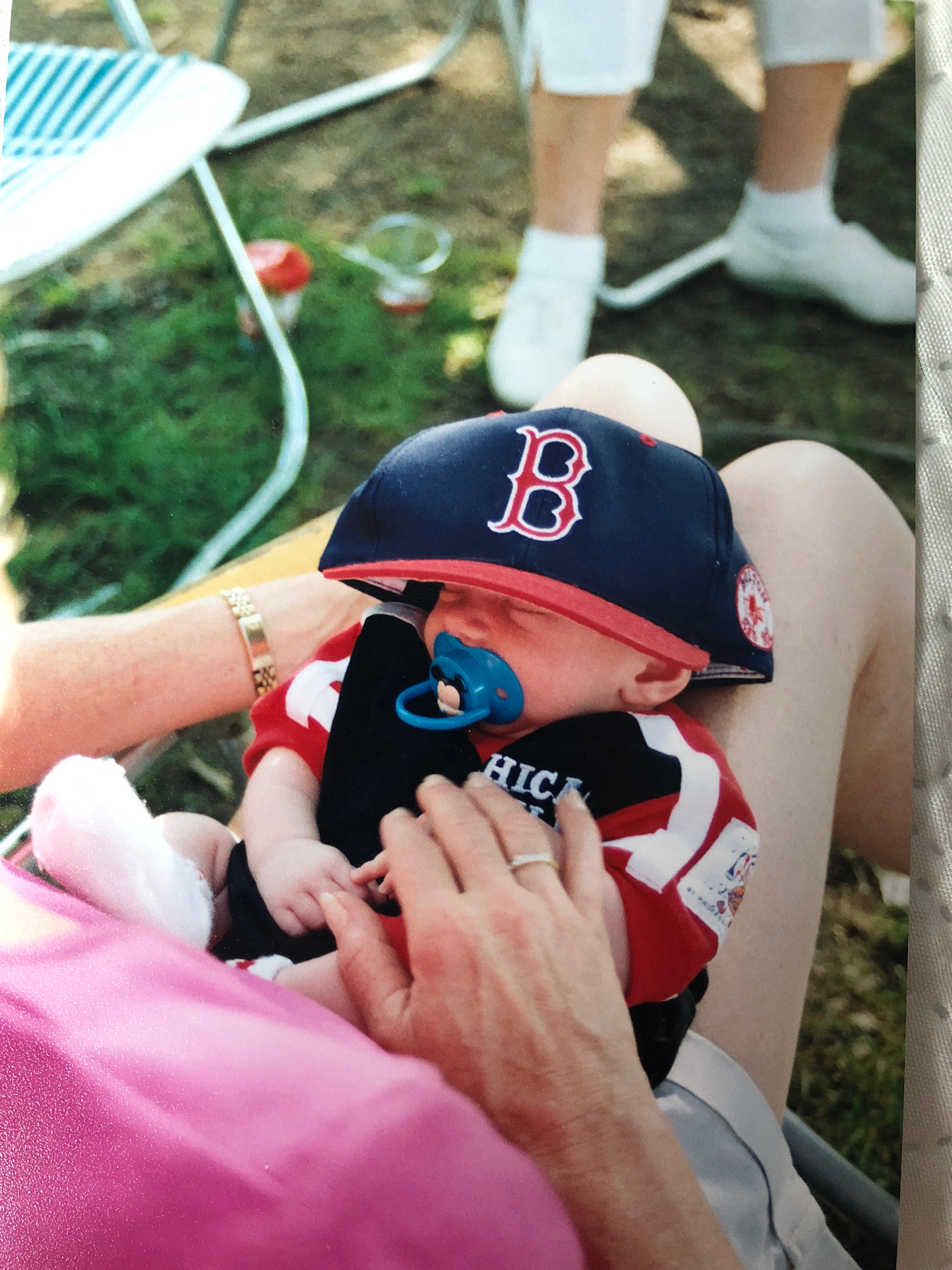
Pure delight came to me last night when Manny Machado struck out. This incredible season came to an end in the right way: A Championship Way.
My love for baseball is back and it came back alongside this blooming beauty of a Red Sox season.
I was supposed to be writing about Trauma Reporting this week, so let me report some Trauma:
Yankees, dusted. Dead.
Astros, dusted. Dead.
Dodgers, dusted. Dead.
Red Sox, CHAMPIONS.
Though some situations were incredibly stressful, the Red Sox only lost 3 postseason games. They won this World Series with ease because they’ve been the best team in baseball all year.
I’m so glad that it was this year.
My year with the Red Sox. It’s just been unbelievable.
My night last night was topped, not when the Sox won the World Series, but when I got featured on the MLB’s Snapchat story with this video:
The MLB censored me. But, I got on a National snap-story that was only featuring snaps from LA, where the Sox won, and Boston.
This was an honor for the ages. It’s got over 100,000 views now. My season with the Red Sox capped off on a national scale for everybody to see, including the Red Sox themselves!
Now, to complete my celebration, I’m flying out to Boston to attend the parade on Wednesday!
I just needed the time to get away from work and school in order to celebrate with my team. It just feels right.
I leave you off with the theme that powered this team to a 119-57 record this year and that powered me into falling in love with baseball all over again.
“It’s Time to Party!” LET’S GO RED SOX!
~DS

 The Danny Diaries